Specialized Care
General Inpatient Care: Intensive Symptom Management When You Need It Most
- Cindy Curry
- February 4, 2026
For most families, hospice care is synonymous with comfort and support provided in a familiar home setting. This is known as Routine Home Care , where a dedicated team of nurses, aides, and specialists make scheduled visits. However, there are times when a person’s symptoms—such as pain, nausea, or breathing difficulties—can become too severe to manage effectively at home.
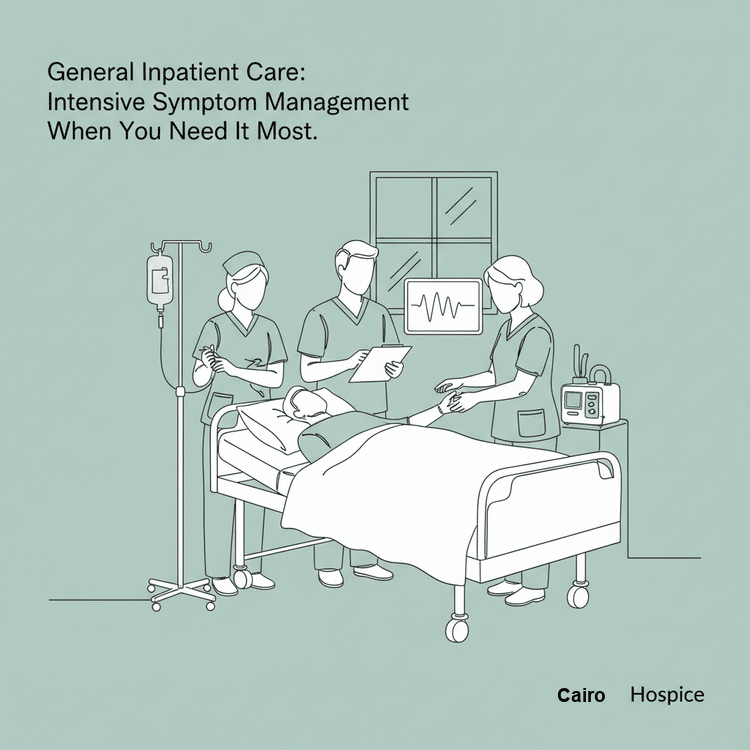
In these challenging moments, a higher level of support is needed. This is where General Inpatient Care (GIP) becomes an essential part of the hospice journey. GIP is a specialized, short-term level of care designed to provide intensive symptom management that can only be delivered in a dedicated clinical setting.
This article explains what General Inpatient Care is, when it becomes necessary, and what patients and their families can expect during this focused period of support.
What is General Inpatient Care (GIP)?
General Inpatient Care is a Medicare-defined level of hospice care intended for patients whose symptoms have escalated to a point where they require round-the-clock nursing care and medical supervision. It is not a permanent move but a temporary intervention to address a specific, acute medical need that cannot be managed in another setting.
GIP is provided in a Medicare-certified facility, which could be a dedicated hospice inpatient unit, a hospital, or a skilled nursing facility that contracts with the hospice agency. The environment is structured to provide immediate, intensive clinical support with a team of professionals available 24/7 to adjust medications, monitor symptoms, and provide hands-on care.
When Is GIP Necessary?
The transition to GIP happens when a patient’s needs exceed what can be provided through scheduled home visits. The decision is always made by the hospice physician and care team in close consultation with the patient and family. The core purpose is to address acute or chronic symptoms that cannot be effectively managed at home.
Common reasons for a temporary GIP stay include:
- Uncontrolled Pain: Severe pain that is not responding to the current medication plan and requires frequent adjustments by a nurse or physician.
- Acute Respiratory Distress: Sudden or severe shortness of breath that requires intensive monitoring and intervention.
- Persistent Nausea and Vomiting: Symptoms that cannot be controlled with oral medications and may require intravenous (IV) hydration or anti-nausea drugs.
- Complex Wounds: Wounds that require specialized, frequent care from a skilled nursing team.
- Seizures or Agitation: Neurological symptoms that are difficult to manage and pose a safety risk in a home environment.
During a GIP stay, the hospice team collaborates with the facility staff to create a comfort-focused plan of care, ensuring that every medical intervention aligns with the patient’s goals and wishes.
The Goal of GIP: Stability and a Return Home
It’s important for families to understand that GIP is not a final step, but a temporary one with a clear objective. The goal of GIP is to provide intensive pain and symptom management to stabilize the patient’s condition, making them comfortable enough to return to their routine hospice care setting, whether that is a private residence or an assisted living facility .
Once the acute symptoms are under control, the hospice team will coordinate a safe and seamless transition back home. This focused, high-acuity care ensures that every moment is lived with as much comfort and dignity as possible, allowing patients to return to the people and places they love as soon as their condition allows.
Even during a GIP stay, the holistic support of hospice continues. Social workers, chaplains, and bereavement specialists remain active members of the care team, providing emotional and spiritual support to both the patient and their loved ones through this difficult period.
When symptoms become overwhelming, it’s vital to have a care team that can respond with the right level of support at the right time. For families navigating the complexities of advanced illness and seeking solutions for intensive symptom management, please call Cairo Hospice at +1 (937) 303-0593 . Our team is here to provide the expert medical care and compassionate guidance you need.
You can also download our Complete Guide to Hospice Care for comprehensive information about the different levels of care and support available to your family.
Key Takeaways
- General Inpatient Care (GIP) is a short-term level of hospice care for managing severe symptoms that cannot be controlled at home.
- The primary goal of GIP is to stabilize a patient’s condition so they can comfortably return to their routine care setting.
- GIP is provided in a dedicated medical facility with 24/7 nursing and physician support, while maintaining hospice’s focus on comfort and dignity.
Read more related articles

Grief Support
End of Life Bible Verses for Caregivers: Strength and Hope
- August 3, 2026
Dementia Care
Guiding Your Spirit: Cultural & Spiritual Hospice Support
- July 27, 2026

Spiritual Signs Death Is Near: A Compassionate Guide
- July 20, 2026
The Compassion Chronicle