
Hospice Basics
The 4 Levels of Hospice Care
- Cindy Curry
- August 6, 2025
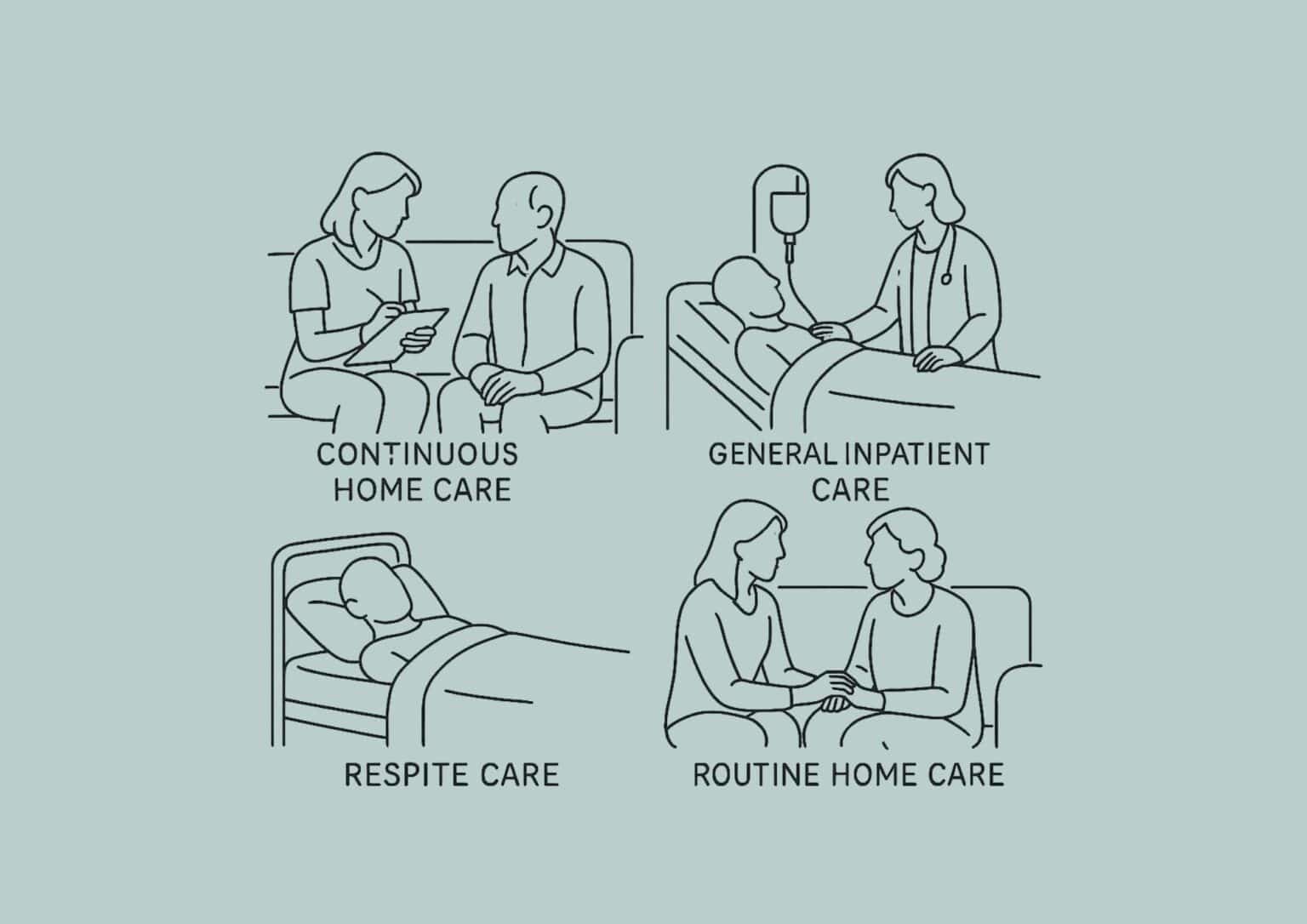
When families first explore hospice care, many are surprised to learn there isn’t just one type of care. In fact, hospice includes four distinct levels —from routine daily visits to urgent, around-the-clock support—so that care can adjust as your loved one’s needs change. At Cairo Hospice, we guide families through each stage, ensuring care is always compassionate, appropriate, and available when it’s needed most.
Understanding these four levels helps families know what to expect and feel confident that appropriate care is always available, whether your loved one needs gentle daily assistance or immediate symptom relief.
What Are the 4 Levels of Hospice Care?
According to Medicare guidelines , hospice care includes four specific levels, each tailored to different situations and needs. At Cairo Hospice, we seamlessly transition between these levels to ensure your loved one always receives exactly the right amount of care.
Hospice Level 1: Routine Home Care (Most Common)
What it includes: This is the foundation of hospice care, where your loved one receives regular visits from our interdisciplinary team in the comfort of their chosen environment—whether that’s home, an assisted living facility, or nursing home .
Typical services:
- Scheduled visits from hospice nurses, aides, social workers, and chaplains
- 24/7 on-call nursing support via phone
- Medical equipment and supplies delivered to your location
- Medication management for comfort and symptom control
- Family education and caregiver support
When it’s used: For patients who are stable and can be cared for safely in their residence with periodic professional visits and family caregiver support.
Did you know that 95% of all hospice care days fall under routine home care according to the National Hospice and Palliative Care Organization ? This makes it the most common type of hospice service and the one most families rely on.
Hospice Level 2: Continuous Home Care (Crisis Support Explained)
What it includes: When patients experience acute symptoms that can’t be managed with routine visits alone, we provide intensive nursing care in the home for 8-24 hours at a time.
Typical situations:
- Severe pain that requires frequent medication adjustments
- Acute shortness of breath or respiratory distress
- Uncontrolled nausea or other symptoms causing significant discomfort
- Family caregiver crisis where additional support prevents hospitalization
When it’s used: During periods of symptom crisis that can be managed at home with intensive nursing attention but don’t require hospital-level care.
For families, this level often feels like a safety net—bringing immediate expert care right into the home during the most stressful times. This level allows families to avoid unnecessary hospital trips while ensuring professional care is immediately available during challenging periods.
Hospice Level 3: Respite Care for Family Caregivers
What it includes: Short-term care in a Medicare-approved facility (up to five consecutive days) to give primary family caregivers a necessary break while ensuring their loved one receives continuous hospice care.
Imagine being able to take a breath, attend a family wedding, or recover from an illness yourself—while knowing your loved one is safe and supported in a hospice setting. That’s the power of respite care.
Benefits for families:
- Primary caregivers can rest, attend to personal needs, or handle other responsibilities
- Patients receive 24/7 professional care in a supportive environment
- Opportunity for caregivers to recharge emotionally and physically
- Peace of mind knowing their loved one is safe and comfortable
When it’s used: When family caregivers are experiencing burnout, need to travel, or require time to recover from their own health issues.
The Centers for Medicare & Medicaid Services recognizes that caregiver support is essential to successful hospice care, making respite care a covered benefit.
Hospice Level 4: General Inpatient Care (Acute Symptom Management)
What it includes: Hospital-level care focused on aggressive symptom management that cannot be achieved in any other setting.
While care happens in an inpatient setting, the focus remains on comfort—not cure. Every effort centers on reducing pain and easing symptoms, never extending discomfort.
Typical scenarios:
- Pain or symptoms too severe for home management, even with continuous care
- Complex medication needs requiring hospital-level monitoring
- Situations where the home environment cannot safely support the patient’s needs
Where it’s provided:
- Dedicated hospice inpatient units
- Hospital beds contracted with hospice programs
- Specialized skilled nursing facility beds
Important distinction: This is still hospice care focused on comfort, not curative hospital treatment. The goal remains quality of life and symptom relief.
How Transitions Between Levels Work
The reality is, most patients don’t stay at a single level the entire time. Their needs shift—and hospice adjusts right alongside them.
One of the greatest benefits of hospice care is its flexibility. At Cairo Hospice, we continuously assess each patient’s needs and adjust the level of care accordingly—often multiple times throughout their hospice journey.
Seamless transitions mean:
- No gaps in care when needs change
- Same hospice team coordinates all levels
- Families don’t need to find new providers
- All levels are covered by hospice benefits
Understanding Your Coverage
All four levels of hospice care are fully covered by Medicare, Medicaid, and most private insurance plans when provided by a Medicare-certified hospice like Cairo. At Cairo Hospice, this means families across Ohio, Indiana, and Pennsylvania can access care without the burden of unexpected costs.
Hospice Care Across Ohio, Indiana, and Pennsylvania
At Cairo Hospice, we provide all four levels of care to families throughout Ohio , Indiana , and Pennsylvania . Our experienced team ensures the right level of care is available when and where your family needs it most.
Whether your loved one needs routine support at home or intensive symptom management, we’re here to provide compassionate care tailored to their unique situation.
Ready to Learn More?
Choosing a hospice provider is a big decision—but you don’t have to make it alone. Call us at +1 (937) 303-0593 to talk with a Cairo Hospice specialist. We’ll walk you through each of the four hospice levels and help you decide what’s best for your loved one.
You can also download our Complete Hospice Care Guide for a step-by-step resource you can keep and share with your family. Remember, understanding your options helps you make the best decisions for your family’s unique situation.
Read more related articles

Grief Support
End of Life Bible Verses for Caregivers: Strength and Hope
- August 3, 2026

Dementia Care
Guiding Your Spirit: Cultural & Spiritual Hospice Support
- July 27, 2026

Spiritual Signs Death Is Near: A Compassionate Guide
- July 20, 2026
The Compassion Chronicle